Snijder Group – Functional Precision Medicine

Modern biomedicine has made huge advances in identifying genes, proteins, and molecular pathways involved in health and disease. But many key problems remain unsolved:

Why do individuals vary so much in how their cells behave?
Even among healthy people, cells can show large differences in how they respond to stimuli, to drugs, or in their baseline behavior. Some of this variation is due to genetic differences, but much comes from non-genetic factors (cellular environment, metabolic state, cellular architecture, etc.). Understanding how and why this heterogeneity arises is crucial for precision medicine.

How can we predict which drug or treatment will work best for a given patient?
Because of inter-patient variability, treatments often have unpredictable efficacy. Being able to test how cells from a patient respond to many perturbations ex vivo (outside the body) promises more personalized, effective therapy choices.

How do molecular networks and cell organization underlie cellular behavior?
Cells are complex systems. It's not enough to know which genes are present; we need to understand their interactions, spatial organization, subcellular localization, regulatory feedbacks, and how these produce emergent behavior.

Scaling up - combining high-throughput experimentation with data and computational modeling:
To tackle heterogeneity, and to make predictions useful clinically, you need large amounts of high-quality data (images, molecular profiling, omics) plus computational methods (machine learning, image analysis, network inference, etc.).

Bridging basic research and clinical/translational relevance:
Many biological findings don’t make it into the clinic, partly because of variability, context-dependence, or because they are discovered in artificial systems. The challenge is to develop methods that work with patient samples, to connect ex vivo testing to actual patient outcomes.

This group is hybrid between BIIE and ETH Zurich.

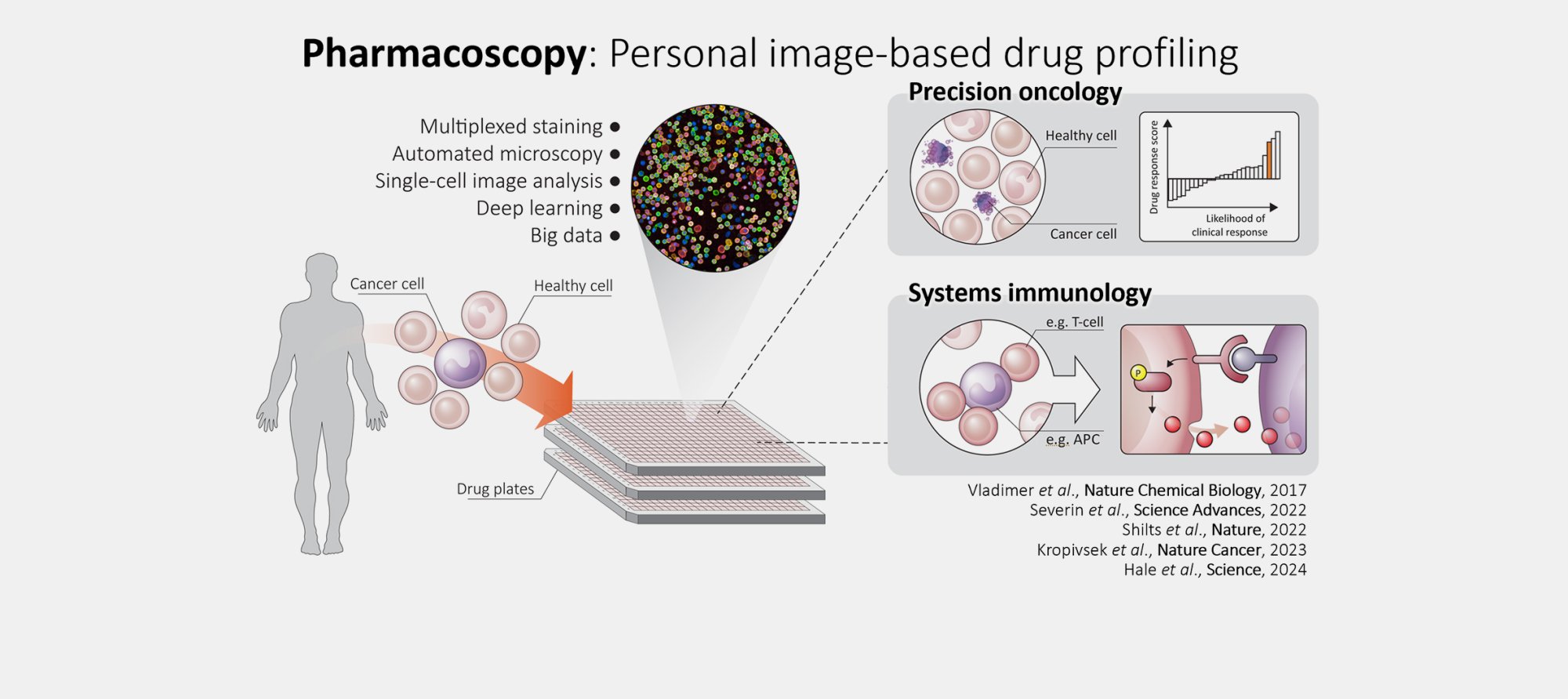
Pharmacoscopy workflow for personalized drug screening
Pharmacoscopy workflow for personalized drug screening.

Research Focus

At the Snijder Lab, we want to understand why cells — even cells from the same person — can behave so differently. This variation shapes how diseases develop and why patients respond in unique ways to treatment. By uncovering the rules behind this cellular diversity, we aim to make medicine more precise and more personal.

To do this, we combine high-throughput experimentation with powerful computational methods. Using advanced microscopy, single-cell analysis, and multi-omics profiling, we can watch how thousands of cells respond to drugs and other perturbations in real time. We then apply machine learning and systems biology approaches to connect these cellular behaviors to the underlying molecular networks and organization.

A central focus of our work is Pharmacoscopy — image-based drug testing directly on patient samples. This technology allows us to measure, at single-cell resolution, which drugs are most effective for an individual patient, bringing us closer to personalized therapy in the clinic.

Ultimately, our goal is to bridge fundamental systems biology with translational medicine. By understanding and predicting how cells function and vary, we aim to help design treatments that are tailored to each patient’s biology, for patients around the world.

Team – Snijder Group

Berend Snijder

Berend Snijder

Faculty Member / Principal Investigator
Julien Mena

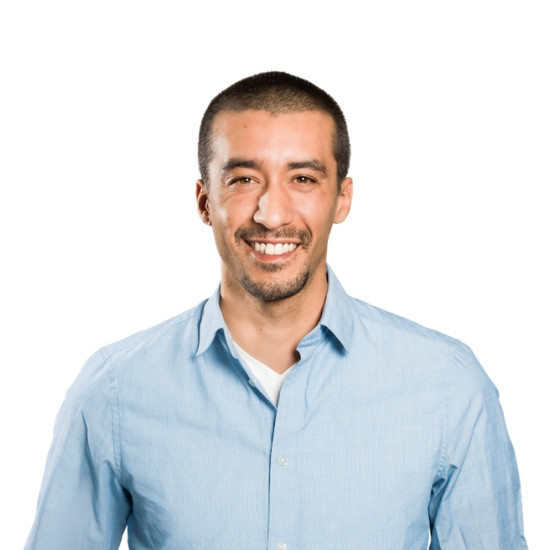
Julien Mena

Lab Manager

Yasmin Festl

Associate Scientist
Lucie Kralickova

Lucie Kralickova

Scientist
Ramon Pfändler

Ramon Pfändler

Scientist

Janine Flück

Research Associate
Sarah Vogt

Sarah Vogt

PhD Student
Jannik Berger

Jannik Berger

PhD Student
Nadia Yorke

Nadia Yorke

Research Associate
Andrea D'Osualdo

Andrea D'Osualdo

Senior Scientist