Seelig Group – Synthetic Immunology

We are currently experiencing a revolution in immunology, driven by DNA sequencing technologies that enable cataloging the cellular and molecular components of the immune system at unprecedented scale and resolution. The time is now ripe to go beyond descriptive atlasing and launch the next stage of this revolution, namely that of “synthetic immunology,” i.e. the de novo design of molecules and cells that are tailor-made to recognize specific pathogens or target disease states and thus improve human health.

Synthetic immunology will be data-driven: Machine learning (ML) models can extract hidden patterns from immune atlas datasets and guide the design of synthetic molecules and cells with desirable features. This program is by necessity integrated with a continued focus on data collection: immune system atlasing is far from complete – our datasets are heavily biased towards populations of European descent, towards cancer as a disease indication and largely exclude children and adolescents. We need to more broadly characterize immune responses across life trajectories and disease conditions and develop technologies for further accelerating data acquisition.

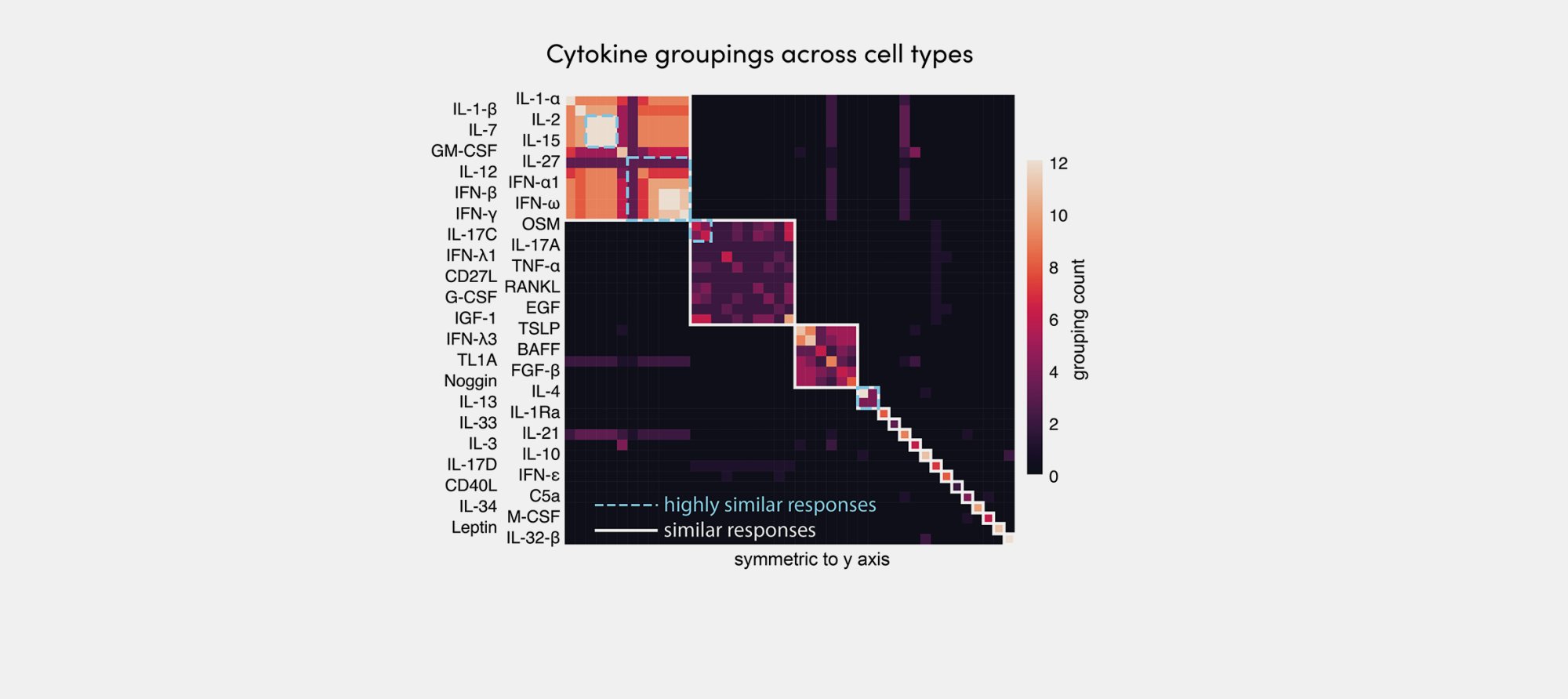
Cytokine co-regulation patterns across cell types
Cytokine co-regulation patterns across cell types.

Research Focus

A first major theme of our work is the development of approaches for reading and writing the cis-regulatory codes governing gene expression. We have pioneered the use of massively parallel reporter assays (MPRAs) together with ML to build predictive models of gene regulation. We have applied MPRAs and ML to understand alternative splicing (Rosenberg et al. Cell 2015), translation (Sample et al. Nature Biotechnology 2019) and polyadenylation (Bogard, Linder, et al. Cell), or transcription (Yin et al. Cell Systems 2025). We have also introduced innovative computational methods for sequence design (Linder et al., Cell Systems 2021).

The need to understand gene regulation at the single cell level led us to a second major thrust, namely the development of tools for single cell analysis. We developed SPLiT-seq, a single cell RNA sequencing (scRNA-seq) method that uses combinatorial barcoding to uniquely index cells (Rosenberg, Roco et al., Science 2018). We also adapted this technology to bacteria, developing one of the very first high throughput single cell RNA sequencing approaches for microbes (Kuchina et al. Science 2021).

At the BIIE, we expect to contribute to three major challenges in systems and synthetic immunology: mapping the response of the immune system to perturbations, improving the performance and specificity of mRNA vaccines and targeting gene expression to cell types and states in the immune system to create “smart” therapeutics with minimal side effects. The unifying theme is that we invent high throughput measurement techniques and combine them with generative ML to design functional molecules.