Biobetters Translational Initiative

The Biobetters Translational Initiative is a pioneering research program focused on engineering novel, improved antibody therapeutics, known as 'biobetters', to address the fundamental challenge of global access to life-saving biotherapeutics. At its core, the initiative is driven by the stark cost disparity surrounding monoclonal antibodies (mAbs), a barrier that leaves millions of patients untreated, particularly in Low- and Middle-Income Countries (LMICs) where the burden of preventable and treatable disease remains highest.

By integrating cutting-edge protein engineering strategies, including large-scale library screening, in silico structural and affinity analysis, and high-throughput functional assays, the program systematically engineers molecules with superior binding function, prolonged half-life, reduced immunogenicity, and improved manufacturability. These properties are not pursued in isolation; each optimization cycle is guided by translational relevance, ensuring candidates remain viable for scale-up and deployment in resource-limited settings. Through strategic collaborations, the Biobetters Translational Initiative advances clinical candidates that meet rigorous standards for efficacy, safety, and cost-efficiency.
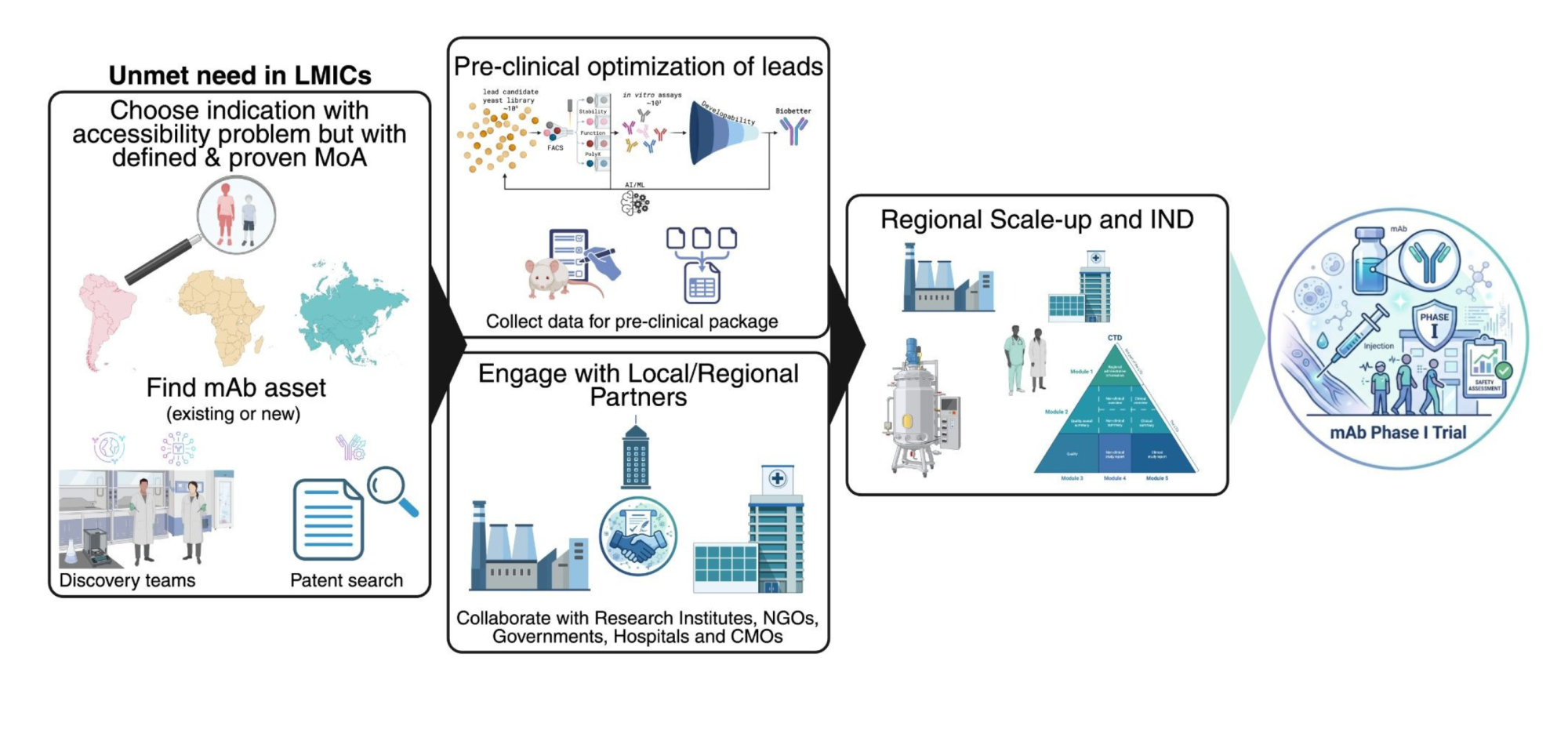
Workflow of the Biobetters Translational Initiative

Research Focus

Our team develops and applies innovative platforms, workflows, and strategies at the intersection of protein engineering, developability assessment, and global health translation. Four integrated research directions drive this work:

  1. Biobetter Engineering improves upon candidate therapeutics through systematic molecular redesign, targeting superior efficacy, extended half-life, and improved manufacturability.

  2. High-Throughput Screening leverages cutting-edge design and screening campaigns to interrogate large sequence libraries, optimizing for binding affinity, polyreactivity profiles, and thermal and chemical stability simultaneously.

  3. Developability and Risk Mitigation employs a rigorous, multi-stage assessment combining in silico liability flagging with experimental characterization, ensuring candidates advance with well-defined manufacturability and stability properties from the outset.

  4. Global Translation Strategy builds collaborative networks with academic institutions and research partners embedded in LMICs, ensuring that therapeutic development is informed by on-the-ground epidemiological realities, local manufacturing capacity, and the specific disease burdens affecting underserved populations.

Together, these pillars shift antibody development towards a globally equitable pipeline, delivering clinical candidates with high translational confidence and broad accessibility.

Team – Biobetters Initiative

Joseph Taft

Senior Principal Scientist

Roy Ehling

Principal Scientist

Juliette Forster

Principal Research Associate

Tamara Lichtenstein

Principal Research Associate