New Faculty Appointment: The BIIE Welcomes Prof. Georg Seelig
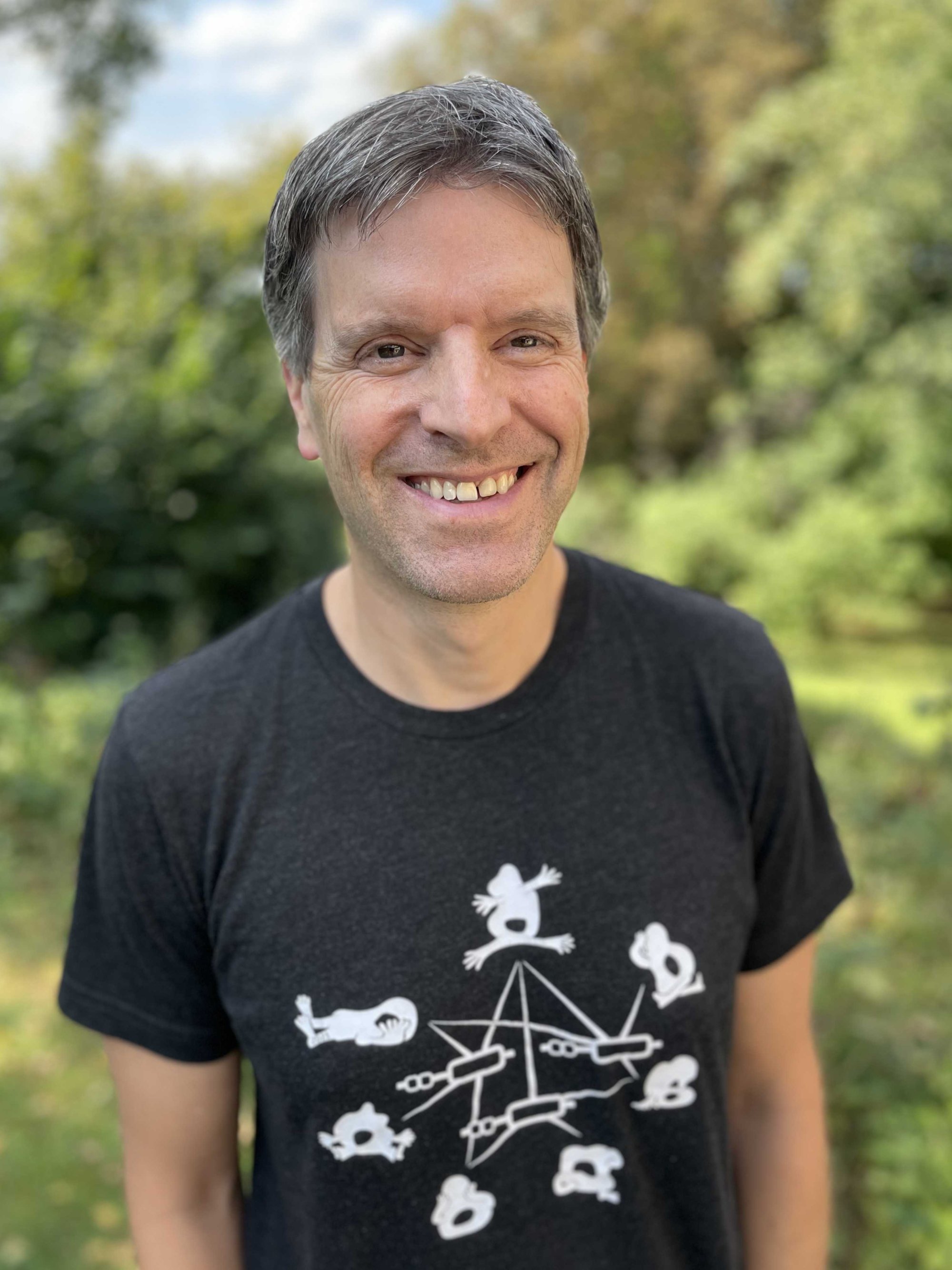
The Botnar Institute of Immune Engineering (BIIE) is pleased to announce the appointment of Prof. Georg Seelig as a Faculty Member. Prof. Seelig joins the BIIE while maintaining his position as the Chris and Heidi Stolte Endowed Professor at the Paul G. Allen School of Computer Science & Engineering and the Department of Electrical & Computer Engineering at the University of Washington.
Prof. Seelig brings a unique interdisciplinary background to the BIIE, having earned his PhD in physics from the University of Geneva in Switzerland. Following postdoctoral work in synthetic biology and DNA nanotechnology at Caltech, he joined the University of Washington as an assistant professor in 2009.
Prof. Seelig's research focuses on decoding and engineering the regulatory mechanisms that control gene expression, combining high-throughput experimental approaches with cutting-edge machine learning techniques. His group has made pioneering contributions in two major areas: developing approaches for reading and writing the cis-regulatory elements governing gene expression, and creating innovative tools for single cell analysis. This work has been recognized with numerous prestigious awards, including a Burroughs Wellcome Foundation Career Award at the Scientific Interface, an NSF Career Award, a Sloan Research Fellowship, a DARPA Young Faculty Award, an ONR Young Investigator Award, and a Rozenberg Tulip Award in DNA computing.
His commitment to translating scientific discoveries into practical applications led to the co-founding of Parse Biosciences, a single cell RNA sequencing startup that emerged from his laboratory at the University of Washington.
At the BIIE, Prof. Seelig's group will tackle three major challenges in systems and synthetic immunology: mapping immune system responses to perturbations, enhancing the performance and specificity of mRNA vaccines, and developing targeted gene expression strategies for cell-type-specific therapeutics with minimal side effects. The unifying theme across these efforts is the incorporation of high-throughput measurement techniques with generative machine learning to design molecules and cells.
Q&A with Prof. Seelig
Your background spans physics, computer science, and biology. How does this interdisciplinary approach benefit your work in immune engineering?
Many of the tools I acquired will be directly applicable to the immune system. I’m thinking in particular of machine learning techniques that can make sense of large datasets of DNA, RNA or proteins sequences but also of more traditional modeling techniques that can be used to describe the biophysical mechanisms that make the immune system work.
More broadly, I think that identifying and solving good research problems is a somewhat universal skill and I hope that I can bring those skills to learning about the immune system.
What drew you to join the BIIE?
I’m excited about the BIIE's mission and finding a more applied, translational direction for my research. After working in university settings for much of my adult life, I’m also thrilled about the idea of helping start an entire new organization.
Can you elaborate on how machine learning and high-throughput methods will advance our understanding of the immune system?
High-throughput measurements based on DNA sequencing, imaging or flow cytometry have transformed all aspects of bio research and immunology is no exception. In fact, given how much immune repertoires and immune cell composition varies between individuals, immunology might be one of the fields where such techniques have the most potential to uncover new and exciting science.
As in other data intensive fields, it’s difficult to extract meaning from all the information that is being collected. ML/AI models are uniquely suited to extract patterns from such data and learn the “code” governing the immune system. What’s more, once they are trained, such models can be used to generate novel synthetic molecules or cells that can help us control and module immune system state.
Your work on mRNA vaccines is particularly timely. What innovations do you hope to bring to this field that could benefit child and adolescent health globally?
My focus so far has been on making better sequences for mRNA vaccines. All parts of the mRNA can be finely tuned to obtain the highest level of protein production but there are many trade-offs that we have to understand. Making better mRNA will hopefully make these vaccines work better but could also make them cheaper to produce if a lower dose of a better mRNA can have a similar activity as a larger dose of a worse one.